
Certification & Regulatory Pathways
Integrated Regulatory Ownership for Medical Devices
Regulatory compliance is a defining factor in the success of medical and diagnostic products. At 2M Engineering, certification is not treated as a separate activity, but as an integrated part of product ownership — embedded throughout development, validation and preparation for production.
We take responsibility for translating regulatory requirements into practical development decisions from the earliest stages of a project. This includes defining and validating intended use, embedding risk management into system architecture, selecting applicable standards and planning verification and validation activities in alignment with the regulatory pathway.
Rather than preparing documentation at the end of development, we integrate regulatory considerations continuously, ensuring that technical choices, testing strategies and production readiness are aligned with certification requirements.

Medical Device Certification Within Product Development
2M Engineering supports certification pathways for medical and diagnostic devices across multiple classifications, including CE-IVD and Class I(m), IIa and IIb products. Certification activities are executed as part of a broader product development trajectory, supported by our experience with quality management systems and regulated production environments.
Through our ISO 13485–certified production infrastructure (within 2M and affiliated organizations), we ensure that development, certification and manufacturing considerations remain consistent and aligned.
Medical device certification is not offered as a standalone service. It is integrated into OEM product development and research projects to ensure technical coherence, regulatory robustness and predictable progression toward market entry.

Regulatory Experience in Practice (MDR)
MDR Certification in a Clinical Research Context
In a large European research project, 2M Engineering supported the MDR certification pathway for a novel endoscopic system designed to demonstrate the applicability of Raman spectroscopy in a clinical in vivo setting for early bladder cancer detection.
Within this project, 2M contributed to defining the regulatory pathway, aligning system design and validation activities with MDR requirements, and enabling the execution of a clinical investigation within the applicable regulatory framework. The resulting publication describes both the technical approach and the regulatory effort required to conduct clinical research under MDR.
This project illustrates how regulatory requirements, system design and clinical validation must be addressed as a coherent whole rather than as separate activities.
Industrial ATEX Certification
Certification Integrated into Industrial Sensor Development
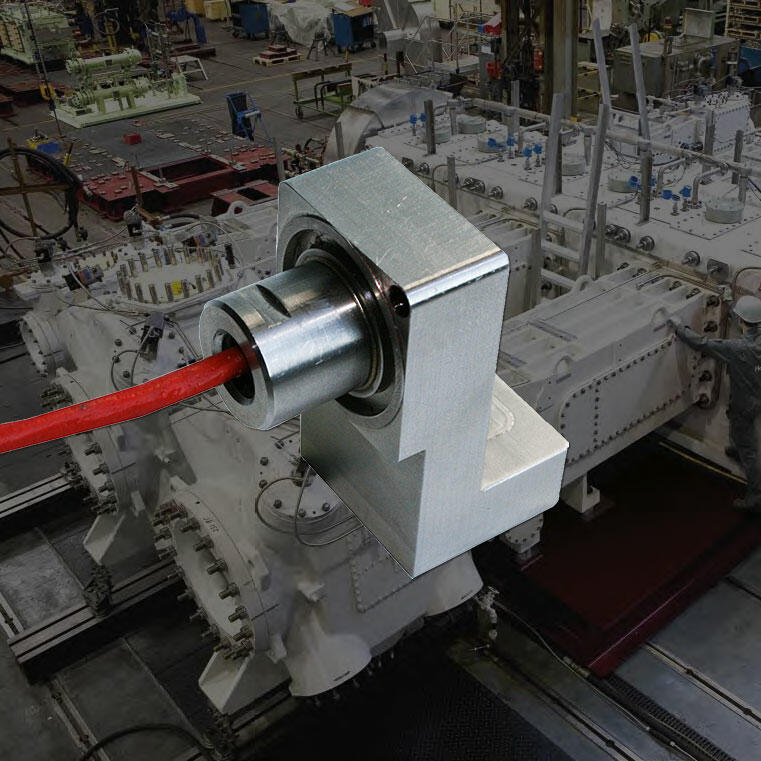
In addition to medical devices, 2M Engineering develops industrial and environmental sensor products that operate in demanding and potentially hazardous environments. Over the years, we have realized multiple products requiring ATEX certification, integrating safety and compliance requirements directly into system architecture and product design.
ATEX certification is not approached as an isolated compliance task. Instead, certification considerations are embedded from the earliest development stages, ensuring that sensing principles, electronics, mechanics and production processes are aligned with the applicable safety standards.
Industrial ATEX certification is not offered as a standalone service. It is executed as part of client-specific OEM product development trajectories, where 2M takes responsibility for technical coherence, certification alignment and production readiness.
Standard CE Certification
CE Compliance as Part of Product Ownership
Depending on application context and intended use, 2M Engineering also supports standard CE certification for non-medical devices, such as professional sports and activity monitoring products.
In these projects, CE compliance is integrated into the overall product development process. 2M takes responsibility for aligning technical design, risk management, testing and documentation with the applicable standards, ensuring a predictable and compliant route to market.
As with medical and industrial certification, CE certification is not treated as a separate activity but as an inherent part of delivering a production-ready product.

Certification Within a Complete Product Development Trajectory
Across medical, industrial and standard CE-regulated products, 2M Engineering applies a consistent principle:
certification is embedded within product ownership, not delivered as a standalone service.
From early risk analysis and regulatory strategy through verification, validation and preparation for certified production, certification activities are fully integrated into OEM product development and research projects. This approach reduces late-stage risk, prevents rework and supports reliable market introduction.
Discuss Your Regulatory or Certification Challenge
If you are developing a product that must meet medical, industrial or regulatory requirements — and require a partner who can integrate certification into the broader product development trajectory — we invite you to start a technical conversation.